Guldagergaard Summer Festival | Skælskør, Denmark
July 10 – August 10, 2024
Claytopia at Guldagergaard
Heilmannsvej 31 A
DK-4230 Skælskør, Denmark
Claytopia is Guldagergaard’s initiative geared towards engaging the public, offering a unique space within the beautiful park surrounding Guldagergaard.
Among Claytopia’s activities are outdoor art exhibitions, concerts, discussion salons, and a design boutique.

Kadri Pärnamets | Fire Scultpure
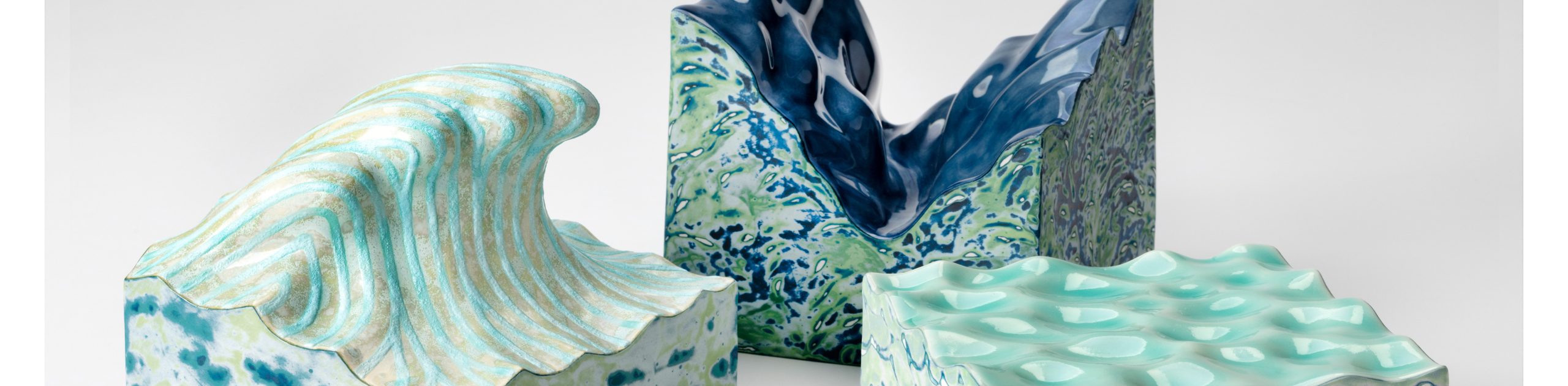
In 2022, Kadri Pärnamets’ Choreography of Water was exhibited at Ferrin Contemporary in North Adams, MA. The solo exhibition cast the gallery in a sea of hand-built porcelain cups, vases, and cloud forms to explore earth’s most precious resource: water. In Summer 2024, Kadri returned to this idea of water through her newest and largest endeavor to date: a 7+ foot fire sculpture.
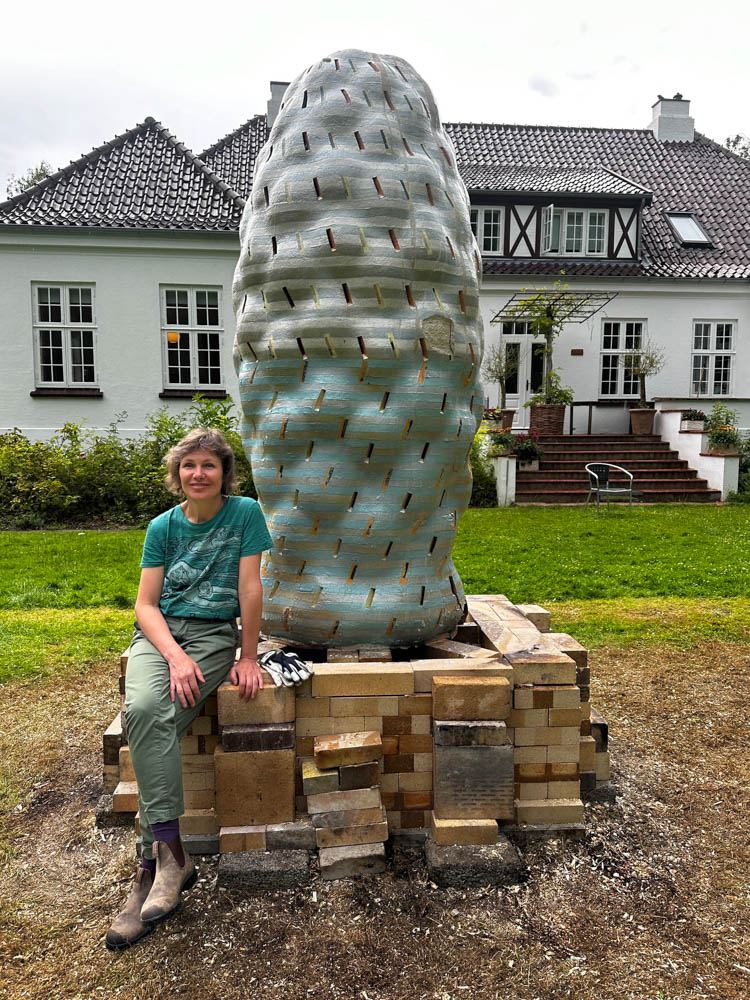
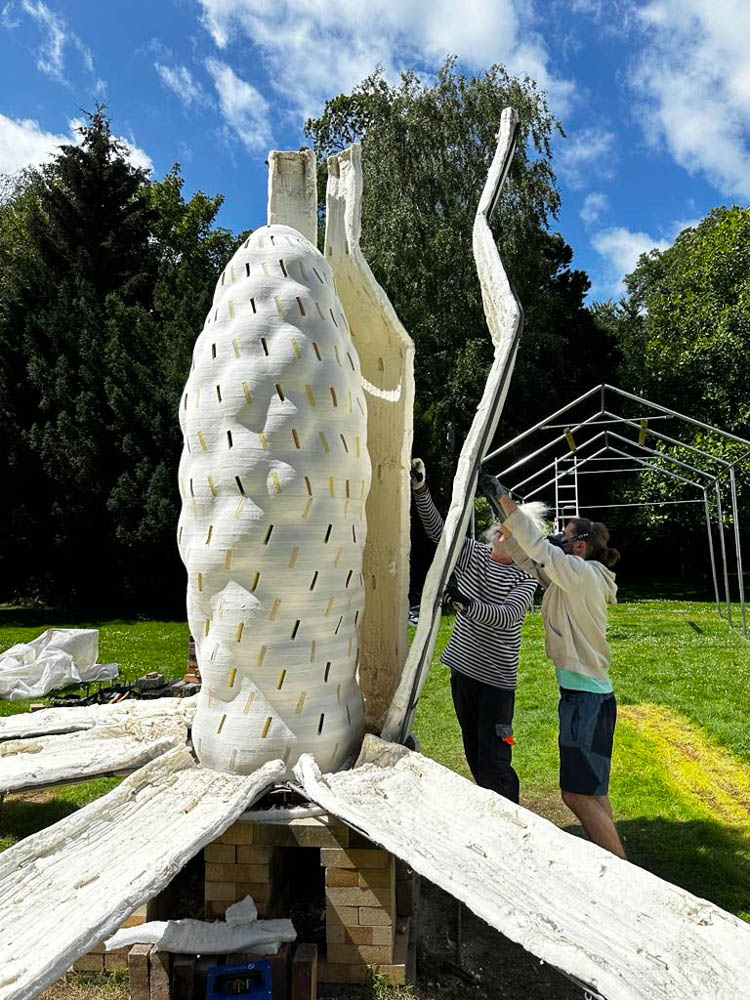
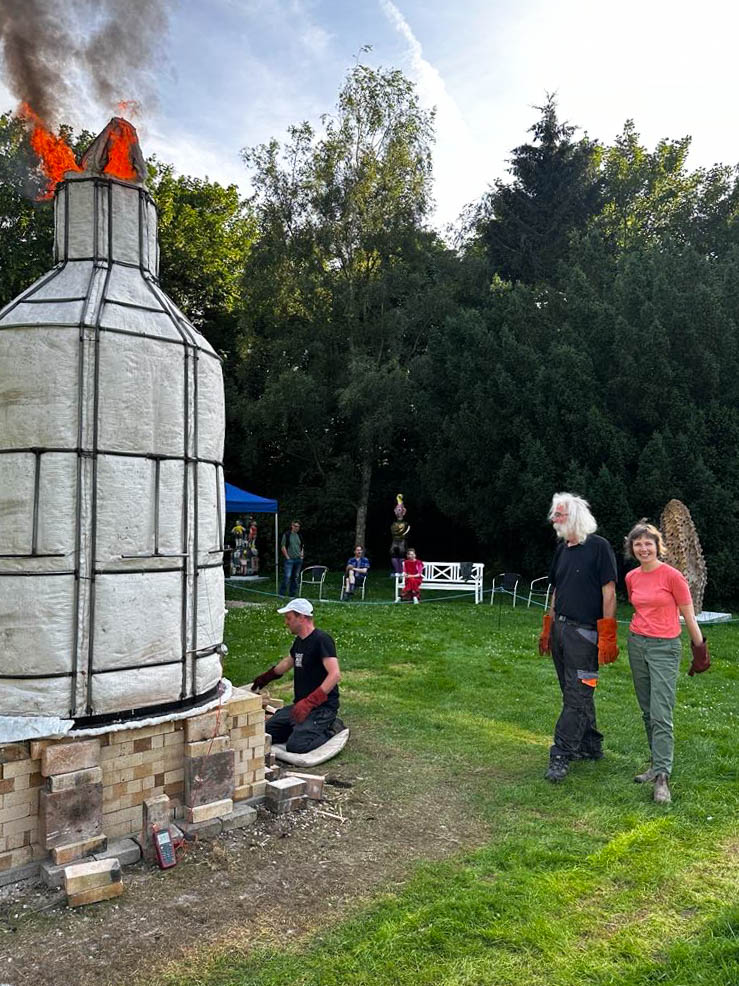
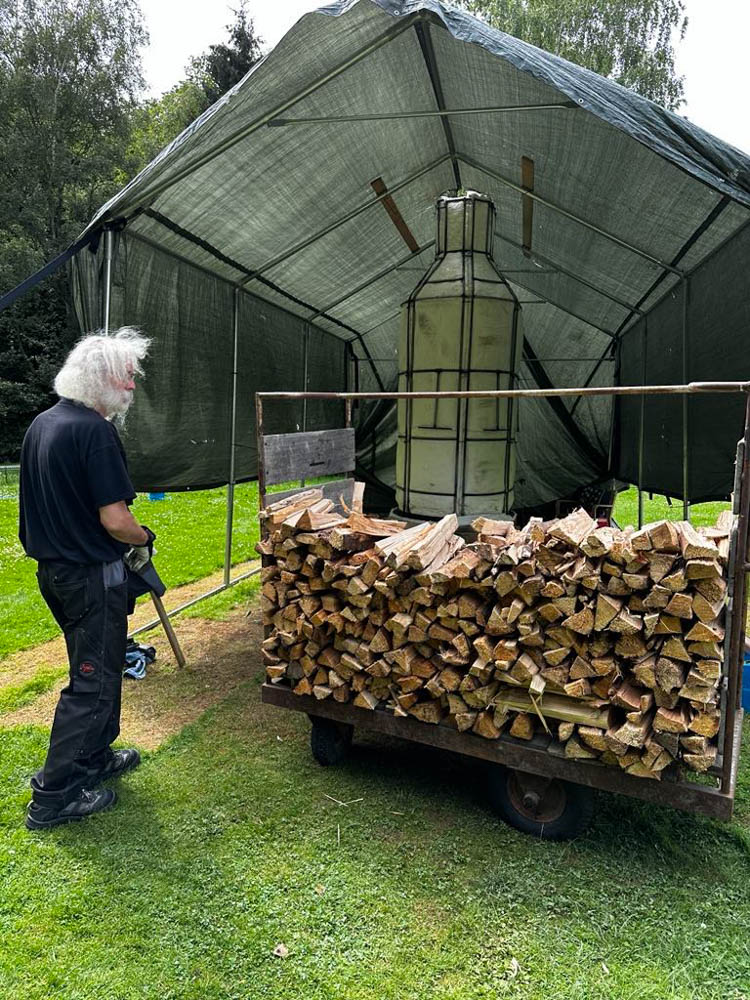
On July 9th, the fire sculpture was fired via a “petal kiln”– a stand-alone, reusable kiln designed to open like flower petals – fabricated by friend and master kiln-maker, Andres Allik. The monumental work was unveiled in its final form at Guldagergaard’s Summer festival, Claytopia.
ABOUT THE FIRE SCULPTURE
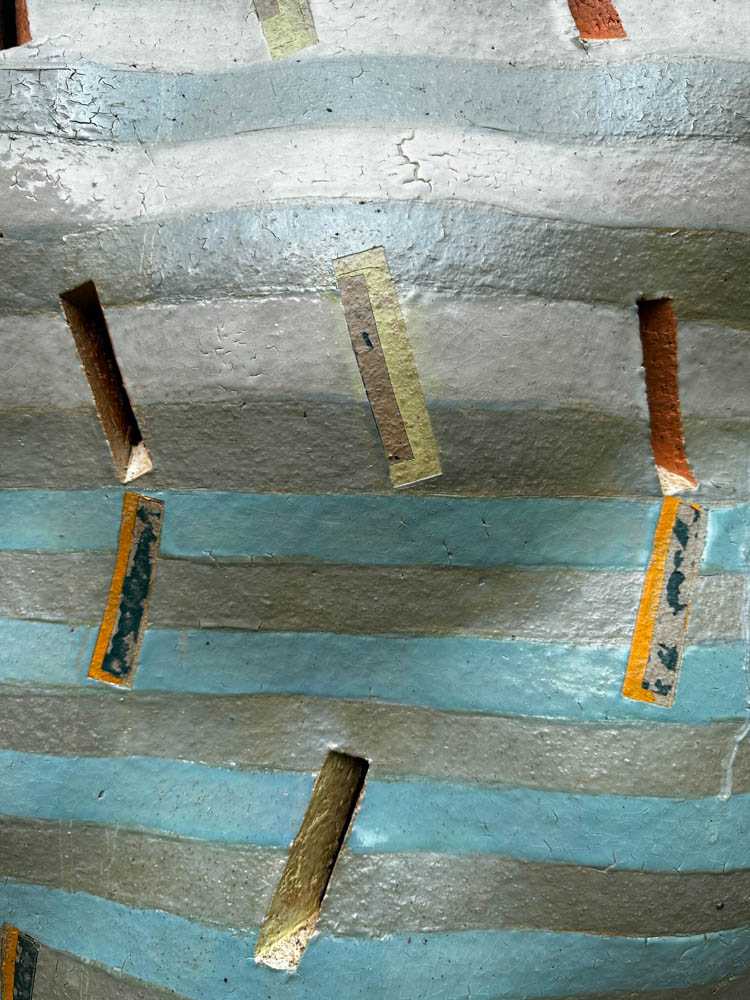
Having displayed a fire sculpture made by Kadri’s husband, Sergei Isupov, years prior, the Claytopia team approached Kadri in 2023 to commission one of her own. Normally working in porcelain, slip, and glaze on smaller scales, this fire sculpture differs greatly from Kadri’s past works. The sculpture was built using stoneware clay, which includes higher amounts of grog (raw, crushed materials containing silica and alumina), resulting in a more rough, textured medium. As it fires, the clay shrinks more than 10%, and any glazes applied to the clay body will produce darker hues than if applied to porcelain. The changing and precarious nature of these materials adds numerous unpredictable factors, which are only disclosed upon removal from the kiln. These factors directly connect to the larger ideas behind Kadri’s past work: testing life’s constant, unpredictable ups and downs and how we move through and with them.
As Kadri contemplates this body of work and what it means to her, she considers the physical and figurative flows of energy and matter in her personal life, her creative process, and the greater push and pulls occurring in the world:
“Everywhere we are surrounded by water, but there are different seas on all sides of us. The seas back home are completely different from the oceans here in the US. Some are calm, some appear scary. Even though it’s all the same water, its characteristics are completely different depending on where you stand. ”


“With so many crazy events happening in the world, on our changing planet, we need ways to ground ourselves. On the physiological level, our moods and ideas change constantly, affecting our day-to-day lives and the people around us. We often need a break from the waves despite the constant movement. Even when the waves are calm, there is still motion, a continuous ebb and flow.”
“My smaller wave forms speak to this feeling of the “sea”; the changing tide, the lows and highs, the stillness and turbulence. Waves themselves move and interact differently, and not just by themselves, but by much larger, planetary forces beyond their control. They, like us, are knocked over, moved, and forced to interact and change with each new moment. My fire sculpture represents the grounding force that keeps us moving through this.”
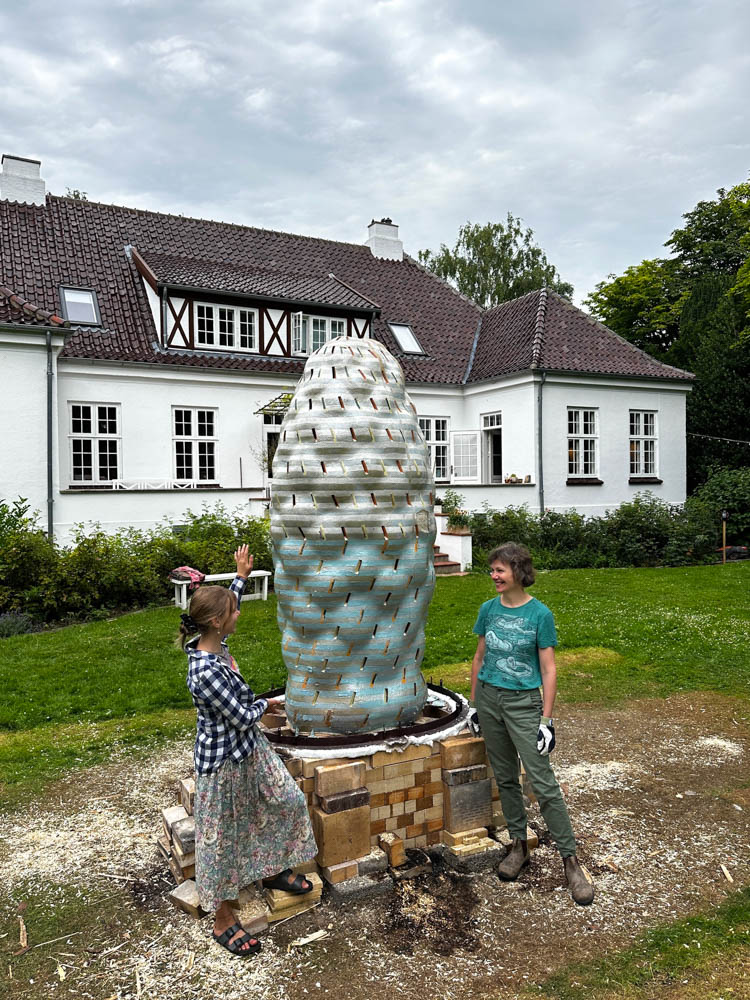
The fire sculpture was built on-site, in situ, at Guldagergaard over multiple days. The Guldagergaard grounds became her studio, with the sculpture exposed to nature’s changing conditions. The bulbous, biomorphic contours Kadri included in the fire sculpture form reference motifs seen on her cups, vases, and cloud forms. She’s included horizontal line gestures through the middle of the piece to represent the coalescence of sea to sky, and the abrupt clashes and waning between waves. As she composed her fire sculpture, Kadri expected the contours, ideas, and intentions to shift as she worked. She had to work quickly, engaging her full strength of skill and technique to problem solve as the material dried and reacted to its outdoor environment. This unpredictability informed and dictated how the piece evolved in its physical qualities, in conversation or contradiction with the forms Kadri imagined in her mind. She encourages the viewer to contemplate their own moments of change, grounding forces, melodies and harmonies in their own lives.